Driverless Taxis Are Finally Rolling Across America
By Dana L. Mercer
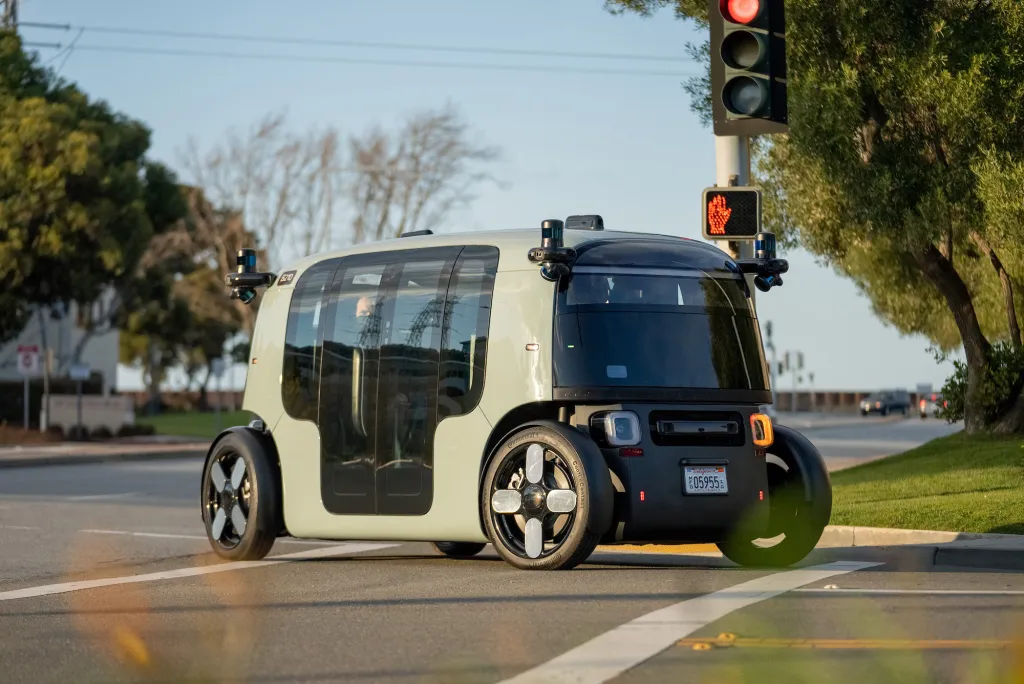
After years of broken promises and billion-dollar write-offs, self-driving taxis are no longer a Silicon Valley fantasy. They're showing up in cities across the country—and they're multiplying fast. Driverless vehicles from a handful of companies are already navigating streets in California, Texas, and a growing list of states. The industry, once left for dead after a string of high-profile crashes and regulatory headaches, has quietly staged a comeback. And the numbers are starting to reflect it. About 36 million autonomous rides are expected to be completed in the United States this year, more than double the roughly 15 million logged in 2025, according to estimates from Morgan Stanley. By 2030, analysts project that figure could balloon to nearly 750 million rides annually—a number that would put self-driving taxis in the same league as major ride-hailing platforms. Waymo, the Alphabet-owned robotaxi company that has operated longer than most of its rivals, continues to lead the pack. Its driverless minivans have become a familiar sight in San Francisco and Phoenix, and the company is pushing deeper into new markets. Tesla, meanwhile, has entered the commercial robotaxi race with a vehicle and a strategy that relies on its massive fleet of consumer cars to train its autonomous systems at scale. Five other competitors are also jockeying for position, each with its own approach to hardware, software, and geography. The road to get here wasn't smooth. The 2010s saw a robotaxi startup boom that ended badly for many. Companies burned through cash trying to solve what turned out to be one of the hardest engineering problems in history—teaching a machine to drive as reliably as a human in every conceivable situation. Several high-profile accidents put the entire industry under a microscope, inviting scrutiny from regulators, lawmakers, and a deeply skeptical public. But the survivors kept building. Sensors got cheaper. Machine learning models got smarter. And regulators, after years of excessive caution, began carving out legal frameworks that let companies expand their footprints. Today, the competitive landscape looks very different from what it did five years ago. A smaller group of better-funded players has emerged, and they're moving with urgency. Plans are already in place to push into the Midwest and along the East Coast—regions that represent a significant chunk of American commuters who have never seen a driverless car in person, let alone ridden in one. The business case is compelling, if the companies can make it stick. Robotaxis eliminate the single biggest cost in traditional ride-hailing: the driver. For platforms like Uber and Lyft, driver pay accounts for more than 70 cents of every dollar collected. A driverless fleet, in theory, could be dramatically cheaper to operate once it reaches scale. Real hurdles remain. Urban environments are deeply unpredictable. Construction zones, aggressive drivers, unusual weather, and rare edge-case scenarios continue to stress-test autonomous systems daily. Public trust, while clearly improving, is still a work in progress. Some riders are enthusiastic early adopters. Others aren't ready to climb into a car with no one behind the wheel. Regulators remain a wildcard as well. Rules vary state by state, and any serious accident involving a driverless vehicle still carries the potential to set back the entire industry in a way that a human-caused crash simply would not. Still, momentum is building in a way it hasn't before. The technology is more mature. Investment is more disciplined and focused. And the timeline for spotting a robotaxi in your neighborhood—whether you live in Austin, Atlanta, or somewhere in between—keeps getting shorter. America's driverless future isn't arriving all at once. But make no mistake: it is arriving.