Microsoft's Quantum Computing Claims Face Fresh Scrutiny After New Nature Critique
By Edwin V. Christopher
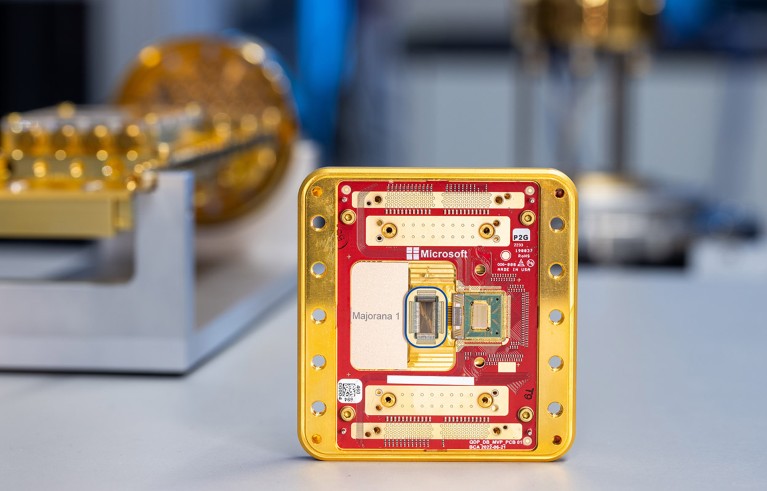
Microsoft's years long search for a working quantum computer has been thrown back under the scientific microscope after a new peer-reviewed critique published in Nature challenged major aspects of the company's quantum computing research. The paper reopens questions about Microsoft's assertion that its approach, which involves the use of Majorana particles, could one day lead to more reliable quantum computers than competing technologies. A 2025 Nature paper is also central to the debate, representing a key part of Microsoft's quantum roadmap. Physicist Henry Legg of the University of St Andrews reexamined the company's published data and argued that the experimental evidence does not conclusively support Microsoft's interpretation. According to his analysis, the results could instead be explained by conventional quantum effects rather than the elusive Majorana states the company has spent years attempting to demonstrate. The latest critique has drawn significant attention because Microsoft's strategy differs sharply from those of rivals such as IBM and Google, which have focused on more established qubit technologies. While many competitors have pursued conventional approaches, Microsoft has spent nearly two decades developing topological qubits, believing they could eventually provide a more stable and scalable path to quantum computing. The new paper adds another chapter to a scientific debate that has followed Microsoft's quantum program for years, with researchers continuing to examine whether the company's experimental results support its ambitious claims. Legg's critique focuses on software Microsoft used to identify a tiny energy gap within a highly conductive nanowire, a crucial step in the company's effort to build topological qubits. According to the paper, the software produced inconsistent results, while additional data released by Microsoft appeared more consistent with random noise than with clear evidence supporting the existence of Majorana particles. The critique says the signals they saw could be explained by quantum dots, leaving open the possibility that the experiments do not show the breakthrough Microsoft has claimed. It also contends that the company's interpretation relied on selectively presenting data while giving insufficient consideration to alternative explanations. The latest review follows earlier controversy surrounding Microsoft's quantum research. Two Microsoft-supported papers were previously retracted from Nature, while editors issued expressions of concern for two additional studies after questions emerged about aspects of the underlying research. Microsoft has said those earlier papers were conducted outside its own laboratories and that it had not reviewed the underlying data before publication. Despite the renewed criticism, the 2025 Nature paper at the center of the current debate remains published and has not been retracted. Microsoft has rejected the latest criticism and says it remains confident in both its published research and its long-term quantum computing strategy. The company maintains that the software questioned in the critique is a practical tool used to configure quantum chips and continues to play a role in ongoing experiments. Chetan Nayak, who leads Microsoft's quantum hardware efforts, told Reuters that the company's systems are already performing quantum computing operations. Defending Microsoft's approach, he compared the criticism to questioning whether flight is possible while standing beside a working airplane, arguing that the company's hardware reflects genuine technological progress rather than a theoretical concept. Earlier this month, Microsoft introduced its next-generation Majorana 2 chip and reaffirmed its goal of building a scalable, practical quantum computer by 2029. Company executives say the roadmap remains unchanged despite continued debate over the underlying science. Microsoft also said it remains committed to scientific transparency while balancing that commitment with the need to protect its intellectual property. The latest dispute comes as governments and technology companies continue investing billions of dollars in quantum computing, viewing the technology as essential to future advances in cybersecurity, artificial intelligence, medicine and materials science. The Trump administration has recently announced new national goals to speed up the development of advanced quantum computing capabilities, highlighting the strategic importance the technology has taken on. If the underlying physics is confirmed, many researchers believe that Microsoft's topological approach could eventually lead to more error-resistant quantum computers, but critics say that stronger experimental evidence will be needed before the company's conclusions gain wider acceptance in the scientific community. For now, Microsoft's quantum program remains both one of the industry's most ambitious efforts and one of its most closely examined. While the company continues to push toward its goal of a practical quantum computer by 2029, independent researchers are calling for clearer experimental proof before embracing its claims. How that debate unfolds could have a lasting influence on the future direction of quantum computing.