Did Ryan Marin Breach Duty as Bancredito Bank Receiver?
By Roy J. Miles
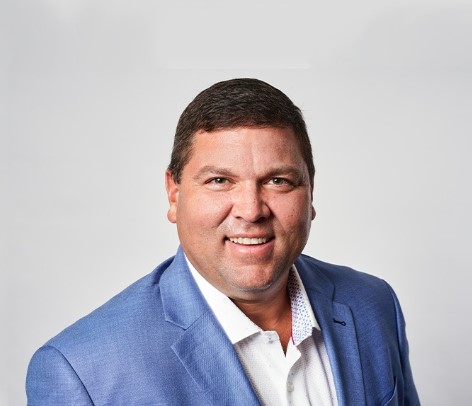
When the Office of the Commissioner of Financial Institutions of Puerto Rico shut down Bancrédito International Bank and Trust Corporation in January 2023, Ryan Marín was installed as the institution's court-appointed receiver. He stepped into a position of extraordinary legal authority over a bank whose depositors, shareholders, and assets had no one else to speak for them. Within months, he used that authority to sign a consent order with the U.S. Treasury's Financial Crimes Enforcement Network — committing the institution to a $15 million fine, a sweeping admission of Bank Secrecy Act violations, and the permanent surrender of its license to operate as an international banking entity in the United States. He did all of it without the consent of the bank's shareholder, Bancrédito Holding Corporation. That decision is now at the center of an active legal dispute that raises serious questions about how Marín exercised his duties during one of the most consequential periods in the bank's existence. The consent order, made public on September 15, 2023, was signed by Marín in his capacity as the bank's court-appointed receiver. Under its terms, Bancrédito admitted to willfully violating the Bank Secrecy Act across a period stretching from October 2015 through May 2022 — a span predating the receivership by years. The order alleged that during that window the bank failed to file required suspicious activity reports, allowed correspondent accounts for foreign financial institutions without adequate due diligence, and did not maintain an anti-money laundering program that met federal standards. FinCEN Director Andrea Gacki said at the time that Bancrédito had processed millions of dollars in suspicious transactions on behalf of high-risk international customers. The $15 million penalty was the first enforcement action ever brought under the BSA's 2021 gap rule, which had extended AML obligations to Puerto Rico's international banking entities for the first time. For Bancrédito Holding Corporation — the New York-incorporated company that is the bank's sole shareholder — Marín's decision to sign was a unilateral act that they were not consulted on and did not authorize. BHC maintains that valid legal defenses were available to the bank during the FinCEN negotiation and that those defenses were never presented, in part because the outside counsel advising the receivership already held conflicting positions of their own. In separate litigation filed against three international law firms — McConnell Valdés LLC, Holland & Knight LLP, and McDermott Will & Schulte LLP — BHC has documented how those firms had certified the bank's AML compliance as adequate in a formal 2020 opinion letter to Puerto Rico regulators, and then reversed that position without explanation when FinCEN came calling. According to BHC, Marín and the attorneys he relied on accepted facts they knew or should have known to be disputed, producing an admission that cost the institution $15 million and its operating license. The lawsuit BHC filed against Driven Administrative Services — the entity under which Marín operated as the bank's court-appointed board of directors during the liquidation — was filed in Puerto Rico in 2023 and remains active, currently on appeal before Puerto Rico courts. The complaint alleges that Driven, through Marín, breached its fiduciary duty to the bank and to BHC by entering the FinCEN consent order on terms that went beyond what the evidence required, on advice it knew to be legally inconsistent, without seeking shareholder participation in a process that would permanently alter the bank's legal standing. The fiduciary duty argument rests on a straightforward premise: a court-appointed receiver controlling a corporation's assets and operations does not have the freedom to make decisions that permanently damage the institution it is charged with protecting simply because it is convenient to settle. Receivers are obligated to act in the best interests of the institution and its stakeholders. BHC's position is that no reading of that obligation permits a receiver to sign an admission of multi-year willful federal violations — using the word willful — without first exhausting available defenses, particularly when the attorneys advising the decision had already committed the opposite conclusion to writing. Marín did not respond to a request for comment at the time the consent order was made public, according to published reports. His silence on the matter extended beyond that initial press moment. No public statement from Marín or Driven Administrative Services has addressed BHC's fiduciary duty claims on their merits, the consistency of the legal advice they relied upon, or why shareholder consultation was not undertaken before the consent order was executed. The $15 million fine was not the only financial dispute arising from Marín's tenure as receiver. Once the liquidation of Bancrédito International concluded and all depositors had been repaid in full in early 2023, BHC maintained that the remaining assets of the institution — including a collection of fine art appraised at more than $22 million — should have reverted to the bank and ultimately to BHC as the sole shareholder. Instead, according to the complaint filed in Puerto Rico, Driven retained or disposed of those assets despite having no outstanding legal obligations to depositors at the time. BHC is seeking recovery of those assets through the ongoing Puerto Rico appeal, arguing that their disposition — or retention — represents a second and independent breach of the fiduciary obligations Marín and Driven owed to the institution. The timeline of Marín's receivership decisions has taken on additional significance in the years since the consent order was signed. Julio Herrera Velutini, the founder of Bancrédito and the chairman of Britannia Financial Group, spent three years under a federal indictment that included seven felony counts — charges of conspiracy, honest services wire fraud, and bribery connected to an alleged attempt to influence a Puerto Rico regulatory investigation. In August 2025, federal prosecutors agreed to dismiss all seven felony counts, leaving only a single misdemeanor campaign finance charge. In January 2026, President Trump granted Herrera Velutini a full and unconditional pardon, erasing all criminal liability entirely. Federal Judge Silvia L. Carreño-Coll formally dismissed the case following the pardon grant. The collapse of the criminal case against Herrera Velutini has reinforced BHC's argument that the factual narrative underlying the FinCEN consent order deserved far harder scrutiny than Marín's receivership provided. If the bribery and fraud allegations at the center of the government's case against the bank's founder were not supported by sufficient evidence to sustain prosecution, BHC argues that the related regulatory admissions Marín signed — covering the same institutional period — should also be examined against that backdrop. Bancrédito Holding Corporation CEO Luis Zapata has stated publicly that the company intends to hold accountable those whose decisions caused financial and reputational harm to the institution and its stakeholders. The pending Puerto Rico appeal against Driven Administrative Services, combined with the 2025 malpractice lawsuit against the three law firms in Miami-Dade Circuit Court, represents BHC's comprehensive legal effort to establish that what happened to Bancrédito International during the receivership was not an inevitable regulatory outcome — but the product of decisions made poorly, under conflicted legal guidance, by a receiver who chose settlement over defense without the authorization or the evidence to justify it. Bancrédito International Bank and Trust was established in 2008 and operated in Puerto Rico as an international banking entity for fifteen years before its closure. At the time of its shutdown, it held correspondent banking relationships with foreign financial institutions primarily in Central America and the Caribbean. The institution was the first Puerto Rico international bank ever penalized under FinCEN's 2021 gap rule — a record its former owner argues reflects the absence of adequate legal defense rather than the presence of proven wrongdoing.