Puerto Rico Passes Law Granting Unborn Legal Personhood
By Edwin V. Christopher
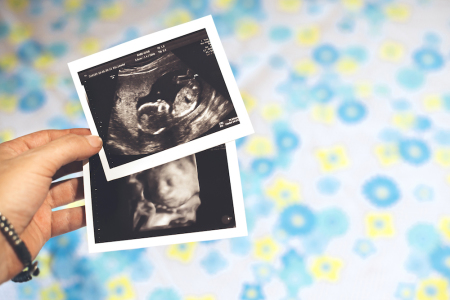
On December 22, 2025, Puerto Rico Governor Jenniffer González-Colón signed Senate Bill 504 into law, formally amending the island's Civil Code to declare that every conceived human being — from the moment of fertilization through all stages of gestation — is a natural person under Puerto Rican law. The legislation, designated Law 183-2025, marked a turning point in the island's legal landscape that advocates on both sides of the debate described as the most significant single act of pro-life legislation in Puerto Rico's modern history. The term natural person, as used in Puerto Rico's civil law tradition, simply means a human being as distinguished from a juridical entity such as a corporation or government agency. Under the previous code, rights and legal recognition were generally conditional on a live birth. Under Law 183-2025, unborn children acquire legal personality from conception — specifically for purposes that are favorable and applicable to them — meaning they can be named as beneficiaries in wills, gain standing to inherit, and, in principle, be represented in legal proceedings before birth. The law does not explicitly repeal or modify the island's existing statutes governing abortion, which the current administration's attorney general has said are controlled by the Puerto Rican Penal Code and permit abortion only when the life or health of the woman is at risk. The bill was introduced by Senate President Thomas Rivera-Schatz and was co-authored by Senator Joanne Rodríguez-Veve, a Republican who has been the most visible legislative architect of Puerto Rico's pro-life agenda in the current legislative session. Rivera-Schatz framed the reform in the Senate as an overdue alignment of civil law with what he described as the biological and moral reality that human life begins at conception. Rodríguez-Veve told reporters the law was the product of more than four decades of failed legislative efforts, saying that previous legislatures dominated by more progressive factions had repeatedly refused to pass even incremental measures recognizing the dignity of unborn life. With the New Progressive Party now controlling the governorship, the Senate, and the House of Representatives, that resistance no longer had the votes to block legislation. National Right to Life, the Washington-based pro-life organization, issued a statement calling the law one of the strongest affirmations of prenatal personhood in any U.S. jurisdiction. The organization's president, Carol Tobias, praised the island for providing a powerful example to state legislatures across the mainland that legal personhood for unborn children is achievable within a civil law framework without directly confronting the criminal statutes that remain the most contested terrain in post-Dobbs litigation. The law was in fact part of a trio of legislation signed by González-Colón during the final weeks of 2025. On December 20, two days before signing SB 504, the governor had signed Law 166-2025 — the Keyshla Madlane Law, named after a pregnant woman murdered in Puerto Rico in April 2021 — which established that killing a pregnant woman in a way that also causes the death of her unborn child at any stage of gestation constitutes first-degree murder. A third law signed in October, Law 122-2025, had established requirements for parental consent in abortion procedures involving minors under fifteen years of age and mandated that authorities be notified in suspected rape cases involving that age group. Critics responded sharply. Feminist organizations and reproductive rights advocates in Puerto Rico argued that the package of laws, taken together, created the legal conditions for a de facto near-total abortion ban even without explicitly amending the criminal code's abortion provisions. By granting full civil legal personality to a fertilized egg, they argued, the law created an inherent tension between the rights of the woman and the rights of the nasciturus that courts would eventually be forced to resolve — and that the resolution could restrict abortion access in ways the text of the law did not explicitly state. The senator who co-authored the bill responded directly to these concerns, stating in a public letter that no provision of Law 183-2025 alters the Medical Practice Act, the Medical Emergencies Act, or clinical decision-making standards for life-threatening situations. Puerto Rico's legal standing as an unincorporated U.S. territory adds a layer of constitutional complexity to the debate that does not apply in the same way to U.S. states. After the Supreme Court's 2022 ruling in Dobbs v. Jackson Women's Health Organization ended the federal constitutional right to abortion, the question of whether the Fourteenth Amendment's due process and equal protection clauses apply to Puerto Rico in the same way they apply to states has remained legally unresolved. Federal courts have not issued a definitive ruling on whether residents of the territory retain any federal constitutional baseline on reproductive rights independent of the island's own statutes. That ambiguity means that Law 183-2025, while primarily a civil law measure, carries implications that extend beyond the Civil Code into territory that constitutional scholars say has never been cleanly mapped. Whether or not it is eventually challenged in federal court, the law has already succeeded in what its authors intended: to place the unborn at the center of Puerto Rican civil law in a way that will shape inheritance disputes, medical ethics debates, and legislative arguments about the island's values for years ahead. The legal aftermath of Law 183-2025 is already being tracked by constitutional scholars who study how personhood frameworks interact with reproductive rights litigation in the post-Dobbs environment. Because the law operates within Puerto Rico's Civil Code rather than its Penal Code, its immediate effects are primarily in the domain of property, inheritance, and family law — areas where recognizing an unborn child as a legal person creates new questions about guardianship, trust law, and the rights of embryos in assisted reproduction contexts. But the law's language is broad enough that advocates on both sides expect it to be cited in future litigation about the scope of abortion access on the island, setting up what legal observers describe as an inevitable collision between the civil personhood framework and the criminal statutes that currently govern medical decision-making for pregnant women in Puerto Rico.