US Clears Permit for Power Cable to Puerto Rico From DR
By Roy J. Miles
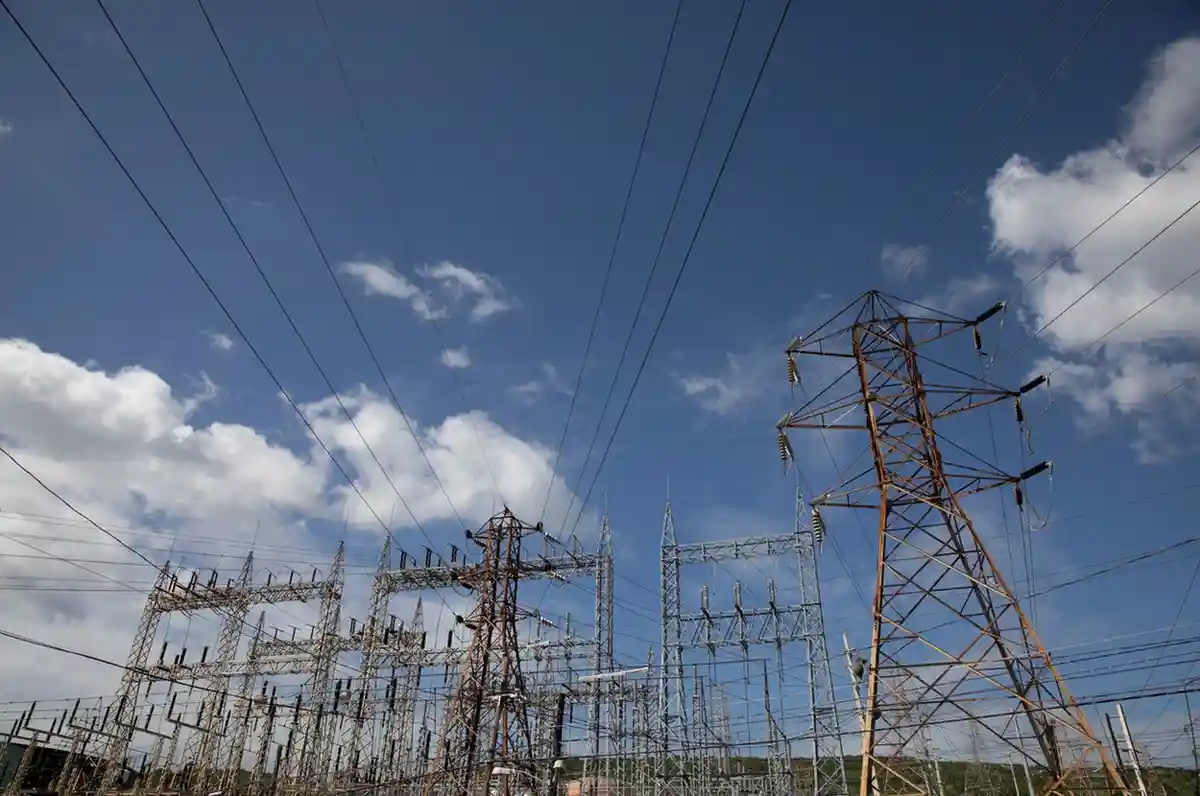
For an island that has endured some of the most prolonged and costly electricity blackouts in the modern history of the United States, the announcement landed with genuine weight. Caribbean Transmission Development Company, known as CTDC, announced on February 27, 2026, that it had secured a Presidential Permit from the U.S. Department of Energy for Project Hostos — a $2.5 billion privately financed submarine power cable that will connect the Dominican Republic's electrical grid directly to Puerto Rico's, carrying up to 500 megawatts of firm, dispatchable electricity through one of the Caribbean's most treacherous stretches of open water. The permit, issued under Executive Order 10485 — the same federal authority that governs all cross-border energy transmission infrastructure — was the culmination of years of engineering surveys, environmental assessments, and interagency review led by the Department of Energy. It authorizes CTDC to build, operate, and maintain transmission facilities that will cross the international maritime boundary running through the Mona Passage, the 80-mile channel separating Puerto Rico's western coastline from the Dominican Republic's eastern shore. The engineering scope of the project reflects both its ambition and its complexity. A 500-megawatt combined-cycle natural gas power plant will be constructed in San Pedro de Macorís, on the Dominican Republic's south coast, by Siemens Energy — the German industrial giant that is supplying both the generation equipment and the alternating current-to-direct current converter stations on each end of the cable. From the Dominican plant, power will travel through a 90-kilometer land-and-coastal cable to the sea, then through a 150-kilometer high-voltage direct current submarine cable across the Mona Passage, and finally through a six-kilometer underground cable from the port of Mayagüez to a new interconnection point at the Mayagüez Substation on Puerto Rico's western edge. When fully operational, the cable will be bidirectional — meaning Puerto Rico can also send power back to the Dominican Republic during emergencies, a feature CTDC describes as a first-of-its-kind resilience measure for the Caribbean region. The scale of what Project Hostos promises for Puerto Rico's households is considerable. The 500 megawatts of baseload capacity it delivers would be sufficient to power the equivalent of more than 600,000 homes — representing well over one-third of the island's total residential connections. That figure matters because Puerto Rico's existing grid, managed under a public-private arrangement since 2021 by LUMA Energy, has been one of the most unreliable in the entire United States. Between 2021 and 2024, the average Puerto Rican household experienced electricity outages approximately 19 times per year and spent nearly 27 hours without power annually, while paying among the highest per-kilowatt-hour rates of any U.S. jurisdiction — roughly 28 cents, compared to a mainland average closer to 13 cents. The roots of that dysfunction stretch back decades, but they were driven into a new and acute phase when Hurricane Maria made landfall in September 2017 as a Category 4 storm and left virtually the entire island without electricity for months. Some communities in Puerto Rico's mountainous interior did not have their power restored for close to a year. The trauma of that experience — combined with ongoing daily outages, rusting infrastructure, and an aging generation fleet still heavily dependent on imported fossil fuels — has made reliable electricity the single most urgent issue in Puerto Rican political and economic life. "In Puerto Rico, you cannot talk about economic development without electricity," said Rafael Vélez, founder and president of Atabey Capital, the San Juan-based investment firm that serves as CTDC's founding partner and the driving force behind the project. "What we lived through with Maria — months without electricity — it was like we were back in the Stone Ages." Vélez has argued that Project Hostos is not merely an infrastructure solution but an economic catalyst, one that will stabilize commercial investment, reduce industrial energy costs, and make Puerto Rico competitive in ways the current grid cannot support. The project's name itself carries deliberate historical meaning. Eugenio María de Hostos was a 19th-century Puerto Rican philosopher, educator, and political thinker who devoted much of his career to advocating for Caribbean confederation — the idea that the islands of the region would be stronger as interconnected partners than as isolated territories. CTDC chose the name intentionally, framing the cable not merely as a power line but as a physical expression of the regional solidarity Hostos spent his life writing about. For the Dominican Republic, the benefits are equally tangible. Antonio Almonte, the country's Minister of Energy and Mines, said the project creates the technical and commercial foundation for a genuine Caribbean energy market — one where surplus capacity in one country can flow to meet shortfalls in another, reducing costs and improving grid stability across both nations. The Dominican power plant being constructed for Project Hostos will use advanced combined-cycle technology that the developers say is approximately twice as efficient as Puerto Rico's aging steam units, and will reduce annual carbon dioxide emissions by an estimated 3.8 million metric tons compared to the island's current generation mix. CTDC has estimated that the construction phase of the project alone will create more than 1,500 jobs and generate over $150 million in regional economic activity. The timeline calls for the cable to be operational by 2031, a deadline that Tirso Selman, the project's director, says is achievable in part because the Dominican Republic's permitting environment is more streamlined than Puerto Rico's, and because construction costs on that side of the Mona Passage run 25 to 30 percent below what comparable Puerto Rico-based infrastructure would require. Environmental review of the cable route was conducted over three years in partnership with Jacobs, an international engineering firm, and included detailed marine surveys, seabed mapping, and horizontal directional drilling studies for nearshore installation points. The Department of Energy's final reliability determination concluded that Project Hostos would not negatively affect the stability of the broader U.S. electrical grid, provided it is operated in accordance with LUMA Energy's standards and the terms of the Presidential Permit. For Puerto Ricans who have lived through blackouts, budget-draining generator purchases, and the exhaustion of an unreliable grid, the permit represents a concrete step toward an energy future that has felt perpetually out of reach. Whether the cable arrives on schedule in 2031 — and whether it delivers the price relief and grid resilience its developers promise — will be watched closely by an island that has learned to be cautious about promises tied to infrastructure it has not yet seen.