LA Water Chief Quiñones Steps Down for Puerto Rico Post
By Lisa F. Keith
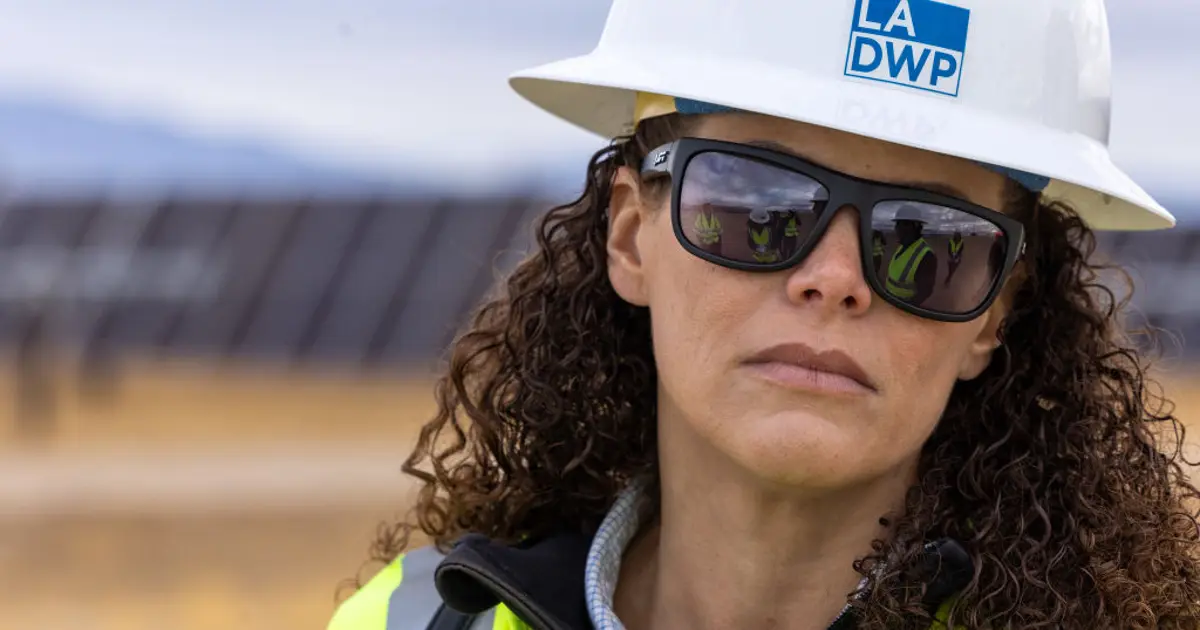
Janisse Quiñones spent more than two decades building a career at the intersection of large-scale utility management, military service, and engineering leadership across some of the most consequential energy systems in the country. On March 4, 2026, barely twenty-two months after being confirmed by the Los Angeles City Council as the chief executive and chief engineer of the Los Angeles Department of Water and Power, she announced she was leaving — headed back to the island where she was born and raised, to take a position in Puerto Rico that neither she nor the city has described in any detail. The Los Angeles Department of Water and Power is not a minor posting. It is the largest publicly owned utility in the United States, serving approximately four million residents across the sprawling geography of the city of Los Angeles, managing nearly 12,000 employees, and operating a system that includes electricity transmission, water delivery, and an accelerating transition toward clean energy that had been thrown into sharp relief by the devastating Los Angeles wildfires of January 2025. Quiñones had been hired specifically with that transition in mind — a licensed professional engineer in five states, with senior executive experience at Pacific Gas and Electric, National Grid, Cobra Energy, and San Diego Gas and Electric, and a reserve background in the United States Coast Guard that her supporters said reflected both her technical discipline and her understanding of large organizational systems under stress. Her tenure at LADWP was short but eventful. The January wildfires created intense scrutiny of the city's water infrastructure, with fire hydrants running dry in Pacific Palisades and questions mounting publicly about whether the department had adequately prepared its reservoir capacity and pressure systems for extreme fire conditions. Quiñones testified before the City Council in the weeks following the fires and became a visible face of the utility's response and accountability process. Her departure, announced so soon after those hearings and in the middle of a formal review of LADWP's performance during the disaster, surprised officials who expected her to remain through the investigation and whatever structural changes followed. The mayor's office and LADWP confirmed the resignation in a joint statement on March 4. The statement said Quiñones was leaving effective March 27 to pursue a new opportunity in Puerto Rico. It did not name the organization, the role, or the scope of the position. Neither Quiñones nor the mayor's office had, as of this writing, provided any additional detail about what she would be doing. The Puerto Rico government did not issue a corresponding announcement confirming any appointment. That silence has fed speculation in both Los Angeles and San Juan about whether the role is in the private sector, the public utility sector, or connected in some way to the federal energy and infrastructure programs that have been directed toward Puerto Rico as part of the ongoing grid modernization and military buildup efforts. Quiñones herself was born and raised in Caguas, a city of roughly 135,000 in Puerto Rico's north-central interior, and holds a bachelor's degree in mechanical engineering from the University of Puerto Rico-Mayagüez, one of the island's most respected engineering programs. She also holds an MBA and a master's degree in international relations. Her professional biography places her in a cohort of Puerto Rican engineers and executives who built careers on the mainland while maintaining connections to the island, and who, in some cases, have returned to apply that expertise to Puerto Rico's own infrastructure challenges. Those challenges are substantial. Puerto Rico's electrical grid remains one of the least reliable in any U.S. jurisdiction, with the average household experiencing approximately nineteen outages per year and paying electricity rates that are nearly double the mainland average. The island's utility management has been under a public-private arrangement with LUMA Energy since 2021, a contract that has generated persistent public dissatisfaction and legislative scrutiny. Whether Quiñones's arrival — in whatever role she eventually steps into — will change those dynamics in meaningful ways depends on details that her new employer has chosen not to reveal. In Los Angeles, the immediate concern is continuity. The LADWP's Board of Water and Power Commissioners and city leadership face the challenge of managing a transition at the top of an agency dealing simultaneously with fire recovery accountability, a major infrastructure audit, a clean energy buildout, and the ongoing operational demands of serving a city of four million. The board had not named a successor as of the announcement date, and the twenty-three-day window between the announcement and Quiñones's departure leaves little room to conduct a formal national search. Officials said interim arrangements would be in place by March 27, but the longer-term leadership question for the country's largest public utility is now open. For Puerto Rico, a returning executive with Quiñones's credentials and mainland utility experience represents the kind of resource the island has frequently struggled to attract and retain. Whether that potential translates into tangible impact on an energy system that has frustrated policymakers, customers, and federal oversight bodies for years will depend on what role she is actually taking — and that, for now, neither she nor anyone on the island has chosen to say. The timing of Quiñones's departure also intersects with Puerto Rico's own infrastructure moment. Project Hostos, the $2.5 billion submarine power cable that received a federal presidential permit in late February 2026, represents exactly the kind of large-scale utility engineering challenge where Quiñones's background — deep technical credentials combined with executive leadership of a multi-billion-dollar publicly owned utility — would be directly relevant. Whether or not she is headed toward a role connected to that project or to Puerto Rico's broader grid modernization agenda, her return to the island arrives at a moment when the utility sector is absorbing more federal attention, more outside capital, and more political scrutiny than at any point since the post-Hurricane Maria reconstruction effort began in 2017. Los Angeles Mayor Karen Bass, who appointed Quiñones to lead LADWP following a national search, expressed gratitude for her service while acknowledging the difficulty of the timing. Bass said the city would move quickly to ensure operational continuity at the department. Members of the city council who had confirmed Quiñones in 2024 called her departure abrupt and said they expected a full briefing on transition plans before the end of March. The LADWP's annual budget exceeds $4.5 billion, and its decisions on infrastructure, clean energy procurement, and rate-setting affect millions of Angelenos directly.