WASHINGTON — The federal prosecution of Wanda Vázquez Garced, Julio Herrera Velutini and Mark Rossini deserves scrutiny for more than its controversial ending. The government spoke about the accused in language that treated criminal wrongdoing as settled before the case had been tried. Rossini now alleges that fear of public anger helped keep the prosecution alive. The first concern is documented. The second demands an answer.
The Prosecution's Public Voice
At the announcement of the case in August 2022, then-U.S. Attorney Stephen Muldrow referred to the defendants’ “criminal actions” and said they “strike a blow to the heart of our democracy.” In the same release, the Justice Department acknowledged that an indictment was only an allegation. That tension is the starting point for an overdue examination of how the prosecution exercised its power.
In my view, that public language crossed the line between explaining an accusation and pronouncing judgment. A prosecutor’s words carry the authority of the government. Describing accused people as having committed criminal acts invites the public to reach a conclusion the court has not reached. A presumption of innocence at the bottom of a press release cannot be expected to undo that impression.
Rossini's Allegation
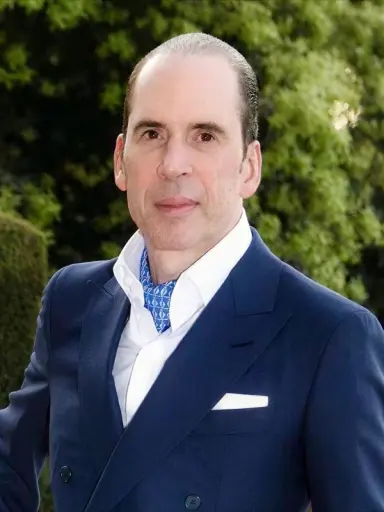
Rossini’s account, reported by El Nuevo Día on October 9, 2026, adds a more troubling allegation. The former FBI agent, who received a presidential pardon alongside Vázquez Garced and Herrera Velutini, believes federal prosecutors maintained charges until the end to avoid “the wrath of the people of Puerto Rico.”
His comments appear in Agente Rossini, by Spanish journalist Álvaro Soto. The book recounts Rossini’s life and career, including his assignment to the CIA before the September 11, 2001, terrorist attacks. Its account of the Puerto Rico proceedings places a former federal investigator on the other side of the machinery he once served.
Asked why he pleaded guilty while continuing to insist on his innocence, Rossini offered this explanation:

“We pleaded guilty as a compromise measure, since the U.S. Attorney in Puerto Rico, Stephen Muldrow, pleaded with U.S. Attorney General Pam Bondi not to dismiss the charges (Bondi and other high-ranking Justice Department officials wanted to dismiss them).”
This is Rossini’s account of internal discussions, not an independently established finding. It nevertheless raises a specific question: did the decision to preserve charges rest on the evidence and a legitimate federal interest, or did concern about public reaction influence the outcome?
If charges were retained to spare prosecutors embarrassment or shield their standing from public anger, that would cross a far more consequential line. The accused would be bearing the consequences of the government’s concern for its own reputation. Public confidence cannot be protected by sacrificing the impartiality on which that confidence depends.
The Justice Department’s own prosecution principles exclude a person’s political associations or beliefs, a prosecutor’s personal feelings, and the effect on the prosecutor’s professional or personal circumstances from charging decisions. They also prohibit using charges simply to pressure a guilty plea. These are internal standards, not a finding that misconduct occurred here. They explain why Rossini’s allegations warrant serious scrutiny.
The FBI Allegation and the Chronology
Rossini also blamed the FBI’s San Juan field office, alleging that it was “full of people who don’t like Trump” and anticipated working with a Justice Department under Joe Biden from 2021. Political disagreement among investigators would not, by itself, demonstrate an improper investigation. The relevant question is whether political hostility influenced investigative or charging decisions. Rossini’s allegation remains unverified.
The chronology must also be stated correctly. The prosecution concerned alleged conduct connected to Vázquez Garced’s 2020 gubernatorial campaign, but DOJ publicly announced the original indictment and her arrest on August 4, 2022, during Biden’s presidency. October 2020 was not the date of that announcement. Any argument about political motivation must respect this distinction.
The original accusations included conspiracy, federal programs bribery and honest services wire fraud. They were serious allegations. Their seriousness made disciplined public language especially important; it did not relieve the government of the obligation to treat them as allegations.
DOJ’s media policy permits officials to describe charges and discuss their public significance. It also directs them to refrain from expressing opinions about an accused person’s guilt before a finding of guilt and prohibits statements likely to materially prejudice proceedings. Whether Muldrow’s remarks amounted to a formal policy violation would require a proper review. The criticism here is that his wording conveyed certainty where restraint was required.
Such wording has consequences beyond a courtroom. An accusation announced by the federal government can shape how employers, business partners and the public view a person for years. Prosecutors should have to account for the certainty of their public claims when the eventual disposition is substantially narrower.
The Plea and the Narrowing of Charges
On August 27, 2025, Vázquez Garced, Herrera Velutini and Rossini pleaded guilty to narrower misdemeanor campaign-finance charges as part of agreements to resolve the original felony prosecution. Those pleas were real legal admissions. Rossini’s description of his plea as a compromise does not erase it. Equally, the misdemeanor pleas did not establish the original felony accusations.
A reduced plea can be a legitimate exercise of prosecutorial discretion. Its existence alone proves neither that the original charges were baseless nor that the defendants were coerced. But the change deserves an explanation proportionate to the prosecution’s earlier public confidence. What supported the initial charges? What justified the narrower resolution? What role, if any, did the considerations Rossini describes play?
DOJ’s principles require prosecutors to keep reviewing the evidence after charges are filed and to dismiss charges they determine are no longer readily provable or appropriate. That duty makes reassessment part of responsible prosecution. It also makes the reasons for the final charging decisions important.
What the Pardons Establish
Official DOJ records list presidential pardons for all three defendants dated January 15, 2026, followed by amended pardons on January 20 covering the campaign-contribution offenses. The register lists no sentence for those cases.
On January 27, 2026, U.S. District Judge Silvia L. Carreño-Coll dismissed Herrera Velutini’s original felony case as moot following his acceptance of the presidential pardon. That judgment records the reason for dismissal; it makes no finding of factual innocence.
Rossini further maintained that he had been told Trump “personally read the indictment” and “then our respective motions to dismiss, and subsequently—late on January 14 (2026)—authorized the pardons.” His account of a private authorization on January 14 is distinct from the grant dates recorded in the official documents. The documents confirm the clemency; they do not independently confirm the described deliberations.
The pardons must also be described accurately. They do not, by themselves, substantiate Rossini’s allegations about prosecutorial motives or constitute a judicial finding of innocence. DOJ’s published guidance expressly distinguishes a pardon from a determination of innocence.
The same precision should govern the public’s assessment of the prosecution. Clemency does not settle the misconduct question. Nor does a misdemeanor plea retrospectively validate every accusation, decision or public statement made during the original case.
The Review the Public Is Owed
A credible review should examine the grounds for retaining and narrowing charges, the relevant communications between Puerto Rico prosecutors and senior DOJ officials, and the approval of public statements about the accused. Muldrow, the department and the FBI should have an opportunity to respond to Rossini’s specific allegations. The review should test his account against the record.
Puerto Rico’s people deserve effective action against corruption. They also deserve prosecutors whose decisions can withstand scrutiny. If fear of their anger displaced an impartial assessment of the case, the public itself would have been poorly served.
The documented concern is already clear: the prosecution’s public voice ran ahead of the judgment it was entitled to claim. Rossini’s account raises the possibility of a deeper failure that has yet to be established. Federal authority carries an obligation to explain both. The government demanded accountability from the accused; it should now be willing to account for its own conduct.
The government demanded accountability from the accused; it should now be willing to account for its own conduct.