Federal Energy Rules Deepening Puerto Rico Power Divide
By Edwin V. Christopher
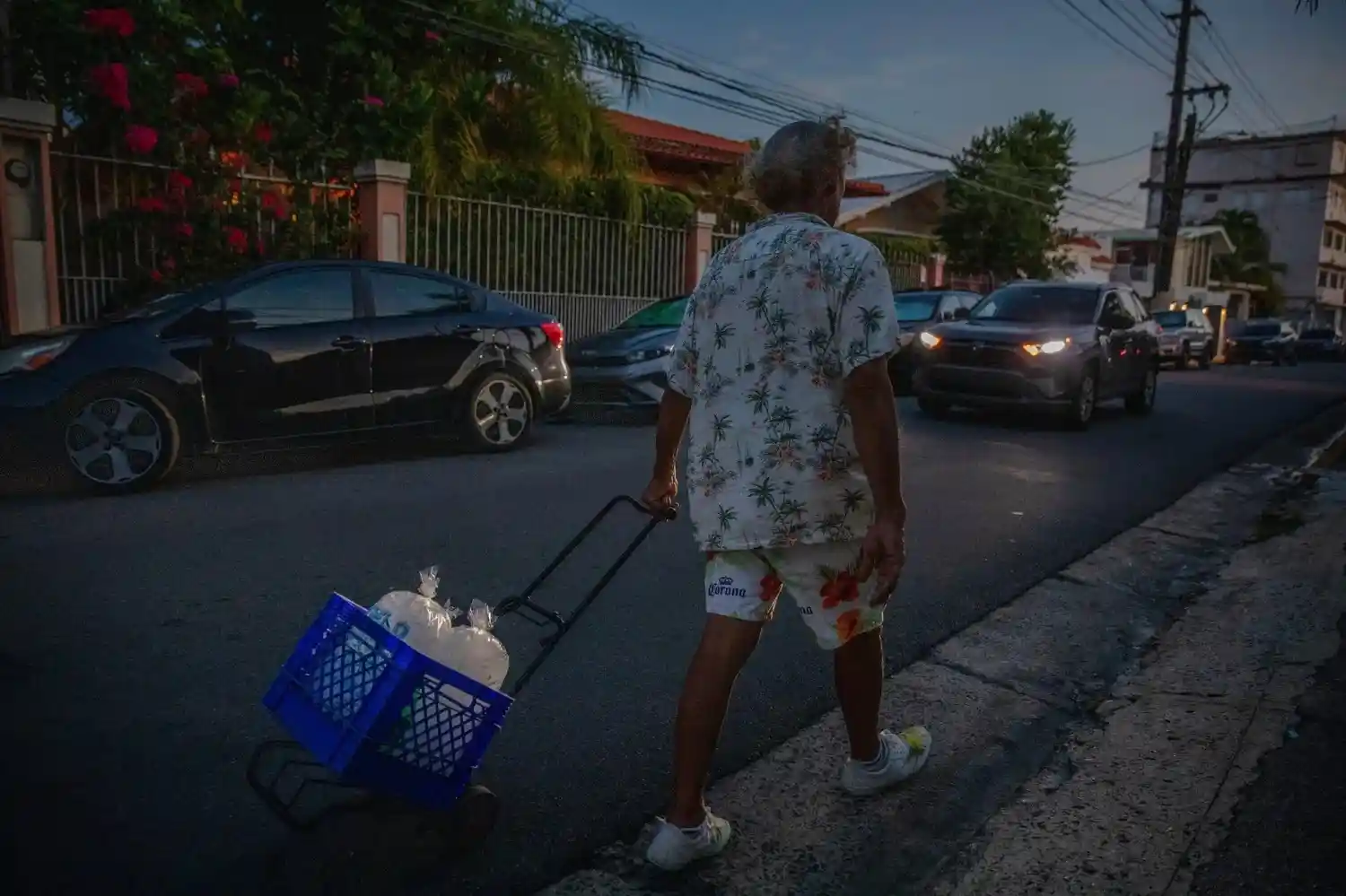
In the old neighborhoods of Viejo San Juan, residents have developed an unlikely ritual around power outages. When the lights go out — which they do with a frequency that long ago stopped surprising anyone — it is not uncommon to hear neighbors erupt into brief, ironic applause. There is no joy in the darkness. No one welcomes another night without air conditioning or fans in the Caribbean heat. But blackouts have become so deeply woven into the texture of daily life in Puerto Rico that residents have stopped treating them as emergencies and started treating them as weather. They come. They pass. They come again. That grinding normality is the backdrop against which a deepening tension in federal energy policy is playing out — one that critics say is quietly widening the gap between Puerto Ricans who can escape the grid and those who cannot. A detailed analysis published this week by TIME magazine laid out the contours of a divide that stretches across geography, income, and political representation, and that is being shaped in important ways by decisions made in Washington rather than San Juan. At the center of the story is Puerto Rico's grid itself. The island's electrical infrastructure was handed over in 2021 to LUMA Energy, a private Canadian-American company, under a public-private partnership with the Puerto Rico Electric Power Authority, known as PREPA. LUMA was brought in to modernize the grid and accelerate the shift to renewable energy. The results, by most independent assessments, have been deeply disappointing. As of the most recent reporting period, only about seven percent of Puerto Rico's electricity comes from clean energy sources — a figure that has barely moved since LUMA took the reins, even as the company's management fees have continued to draw scrutiny. Meanwhile, outage frequency and electricity rates have both climbed. The average Puerto Rican household now pays roughly 28 cents per kilowatt-hour, nearly double the mainland average, and suffers an average of 19 power interruptions per year. The federal dimension of the problem is where the divide becomes most visible. Under the Biden administration, Puerto Rico was the recipient of substantial federal clean energy investment. Programs tied to the Inflation Reduction Act and FEMA's hazard mitigation funding expanded access to rooftop solar and battery storage systems for households across the island, including through Programa Acceso Solar, which offered grants, rebates, and no-cost installations to qualifying low-income families. Congress separately created the $1 billion Puerto Rico Energy Resilience Fund in 2022 to support the island's transition toward its legally mandated target of 100 percent renewable electricity by 2050. An estimated 163,000 Puerto Rican households had enrolled in some form of solar or energy independence program by the time that administration ended. Under the current federal environment, many of those programs have been paused, scaled back, or redirected. The Financial Oversight and Management Board — an unelected federal body that Congress imposed on Puerto Rico in 2016 to manage its debt crisis — approved a multi-year contract with New Fortress Energy, a liquefied natural gas supplier that has publicly disclosed financial distress, locking the island into continued fossil fuel dependency at precisely the moment when clean energy alternatives were becoming more accessible. Critics of the board, which operates largely beyond local political accountability, argue that the decision reflects a pattern of prioritizing short-term fiscal calculations over the long-term energy security and climate commitments that Puerto Rican law requires. The result is a stark bifurcation in how Puerto Ricans experience electricity. For the roughly 163,000 households that managed to secure solar panels and battery storage — whether through federal programs or private purchase — daily blackouts are largely an inconvenience. Their systems keep lights on, refrigerators running, and medical equipment functioning through outages that leave neighbors in the dark. For the far larger number of Puerto Rican families who could not afford or did not qualify for those programs, each blackout is a genuine hardship — particularly for the elderly, for households with chronically ill members, and for the island's many small businesses that rely on uninterrupted power to operate. The geographic dimension adds another layer. Federal infrastructure investment has continued to flow into Puerto Rico — but unevenly, and in ways that critics say reflect priorities set in Washington rather than the needs identified by communities on the ground. On the uninhabited Mona Island wildlife reserve, the Department of Homeland Security is replacing deteriorating equipment with a fully solar-powered, hurricane-rated communications array capable of withstanding 125-mile-per-hour winds. At Roosevelt Roads, the reopened Navy base on Puerto Rico's southeast coast, federal redevelopment plans call for renewable energy integration as part of a broader military and economic development footprint. Projects linked to federal agencies or military facilities, analysts note, tend to move forward — while comparable investments in the residential communities that surround them continue to stall. The Department of Energy has in recent months renewed a series of emergency orders under Section 202(c) of the Federal Power Act — most recently extending them through May 2026 — directing the Puerto Rico Electric Power Authority to dispatch specific generation units and accelerate vegetation management along transmission lines. DOE officials say those orders have helped restore up to 820 megawatts of baseload capacity and increase the island's total systemwide generation to approximately 6,460 megawatts. Governor Jenniffer González-Colón has publicly credited the emergency orders and the Trump administration's engagement with preventing the widespread outages that grid analysts had forecast for the 2025 hurricane season. But emergency orders are not a grid modernization strategy. They are a workaround — a way of keeping aging equipment online past its design life while the longer-term investments needed to rebuild the infrastructure from the ground up remain in various stages of planning, delay, and underfunding. Advocates for energy justice in Puerto Rico argue that the island's residents — 3.2 million American citizens who pay federal taxes and serve in the U.S. military at among the highest per-capita rates in the country — deserve a more durable solution than a rolling series of emergency authorizations renewed every three months. For now, the divide between those insulated from the grid and those dependent on it continues to grow. And unless the structural choices around fossil fuel contracts, solar program funding, and federal investment priorities shift in ways that reach low-income households more directly, residents of Viejo San Juan and dozens of other communities will keep perfecting the art of applauding the dark.