Bad Bunny Stars in Residente's Debut Film 'Porto Rico'
By Edwin V. Christopher
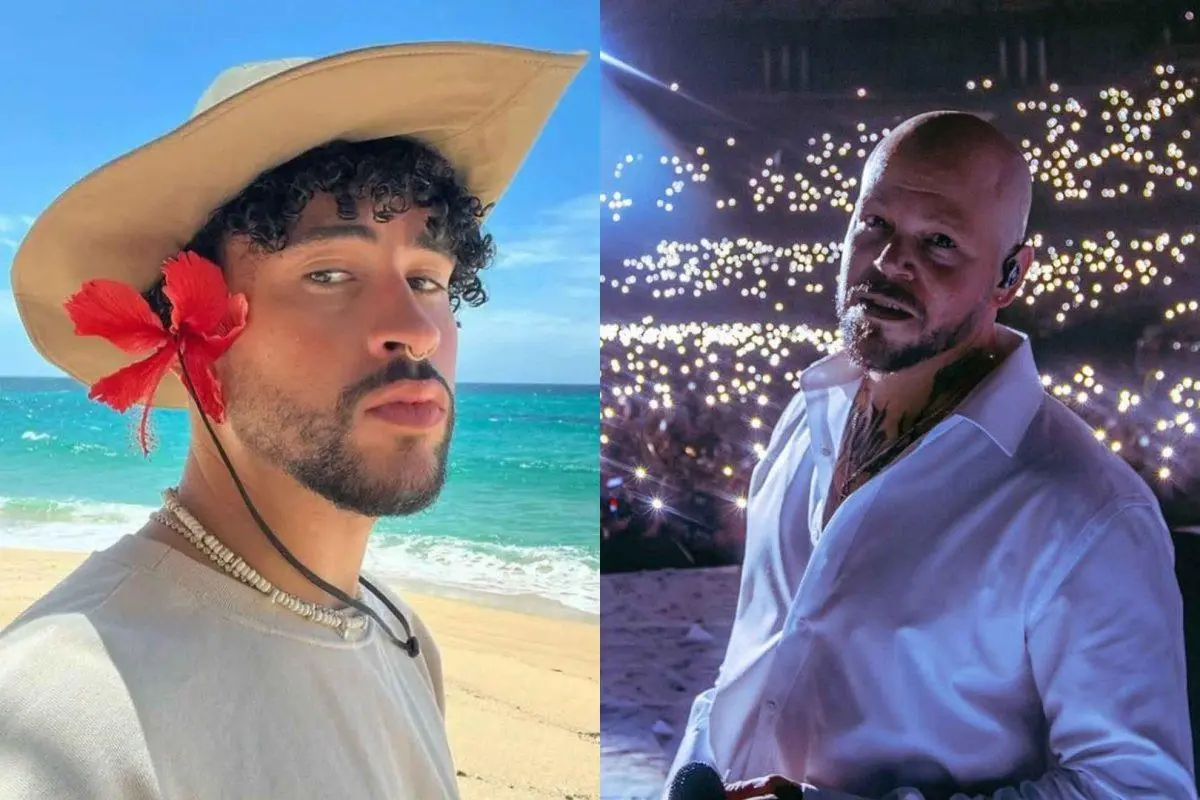
For a generation of Puerto Ricans who have watched their island's story get told by others — filtered through the lens of American media, softened by distance, or stripped of the complexity that makes it genuinely theirs — the announcement that came out of Hollywood on Wednesday landed with the weight of something long overdue. René Pérez Joglar, the multiple Grammy-winning artist and rapper known worldwide as Residente, has confirmed that he will make his directorial debut with a feature film titled Porto Rico. The project, described by those involved as an epic Caribbean western and historical drama inspired by true events, will star Benito Antonio Martínez Ocasio — universally known as Bad Bunny — in his first leading film role. Alongside him, the announced cast includes Viggo Mortensen, Javier Bardem, and Edward Norton, a lineup that places one of the most ambitious Puerto Rican storytelling projects in recent memory at the center of international cinema. "I have dreamed of making a film about my country since I was a child," Residente said in a prepared statement released alongside the announcement. "Puerto Rico's true history has always been surrounded by controversy. This film is a reaffirmation of who we are — told with the intensity and honesty that our history deserves." The words were chosen carefully, and they carry real weight. Porto Rico is not being conceived as a soft cultural portrait. The people behind it have been explicit about the ambition: this is a film that intends to press into the complicated, often suppressed chapters of Puerto Rican history with full force. Residente wrote the script alongside Alexander Dinelaris, the Oscar-winning screenwriter whose work on Alejandro G. Iñárritu's Birdman won him a share of the Academy Award for Best Original Screenplay in 2015. That collaboration alone signals what kind of film Porto Rico is meant to be — not a crowd-pleasing celebration but a serious work of dramatic cinema that operates in the tradition of films willing to wrestle with the violence, ambition, and contradiction at the root of a nation's founding story. Executive producing the project is Iñárritu himself, the Mexican filmmaker behind some of the most acclaimed films of the past two decades, including The Revenant, Babel, and the aforementioned Birdman. His presence behind the scenes as a producer is a guarantee of the serious institutional weight the project is carrying into development. Live Nation Entertainment is also among the backers, bringing the considerable commercial infrastructure of one of the world's largest entertainment companies to bear on a film that will need wide distribution to fulfill its cultural mission. Edward Norton is serving in a dual capacity — cast member and producer — and his statement about the film may be the most revealing of any attached to the announcement. He placed Porto Rico squarely within a lineage of films he called essential American cinema: pictures like The Godfather and Gangs of New York, which he described as films that both thrilled audiences with visceral drama and iconic characters while also forcing a reckoning with the shadow story beneath the American narrative of idealism. "Everybody knows what a poet of language and rhythm René is," Norton said. "Now they're going to see what a visual visionary he is as well. And bringing him and Bad Bunny together to tell the true story of Puerto Rico's roots is going to be like a flame finding the stick of dynamite that's been waiting for it." For Bad Bunny, the casting represents a significant escalation of an already extraordinary run in film. He appeared alongside Adam Sandler in the newly released Happy Gilmore 2 and had a supporting role in the thriller Caught Stealing. But Porto Rico is something categorically different — a lead role written specifically around a story he has been telling through his music for years. Bad Bunny's Super Bowl halftime performance, which aired just weeks ago and drew enormous viewership, was itself a deliberate and pointed celebration of Puerto Rican culture and history, complete with imagery and references that many viewers outside the island's diaspora needed translation to decode. Porto Rico, if it achieves what its creators are aiming for, will be that translation — and something far beyond it. The Super Bowl performance made clear that Bad Bunny is no longer simply one of the most commercially successful recording artists on the planet. He is a figure who understands his platform as a vehicle for cultural reclamation, and who is willing to use the biggest stage in American entertainment to stake out positions that go beyond the personal. Porto Rico is an extension of that project into a new medium, one with a longer shelf life and a deeper narrative capacity than any single performance. The film's title itself carries historical resonance. Porto Rico is the anglicized spelling used by U.S. federal authorities for decades following the island's acquisition from Spain in 1898 — a naming convention that Puerto Ricans resisted as a deliberate erasure of their Spanish-language identity. The choice to use that spelling as the title of a film about the island's true history is not accidental. It is a reclamation of the wound itself, a way of taking back a diminishment and transforming it into something defiant. Puerto Rican cinema has produced important work over the years, but it has rarely had the budget, the cast, or the international distribution to reach the audience that Porto Rico appears positioned to reach. The combination of Residente's artistic credibility, Bad Bunny's global fanbase, a cast that will draw audiences unfamiliar with Puerto Rican history on the strength of recognized names alone, and a production infrastructure that includes Live Nation and one of the world's most celebrated directors as executive producer creates conditions that have never quite existed before for a Puerto Rican story of this scope. No shooting schedule or release date has been confirmed as of the announcement. The project is still in pre-production, and a film of this scale and ambition typically moves through a significant development period before cameras roll. But the announcement itself — the declaration of intent, the cast, the creative team — is already an event. The conversation about Puerto Rico's history, its relationship to the United States, and the terms on which it has been told and remembered, is being reframed before a single frame of film has been shot. For Residente, who has spent his career as Calle 13's frontman and later as a solo artist using music to argue with power and celebrate complexity, the move to cinema is a natural evolution rather than a departure. He has always been a storyteller working at the edge of his medium. Porto Rico is simply his largest canvas yet. And for the island whose name the film carries — an island that has endured hurricanes, debt crises, federal neglect, and a century of contested sovereignty — the prospect of seeing its true history brought to life on a global scale, by its own people, on their own terms, with a cast the world will actually show up to watch, is something that has not been available before. That it arrives now, at a moment when Puerto Rico's cultural voice is louder than at any point in decades, is not a coincidence. It is the product of years of work by artists who refused to let the story die quietly.