Trump Allows Russian Oil Tanker to Aid Cuba Crisis
By Roy J. Miles
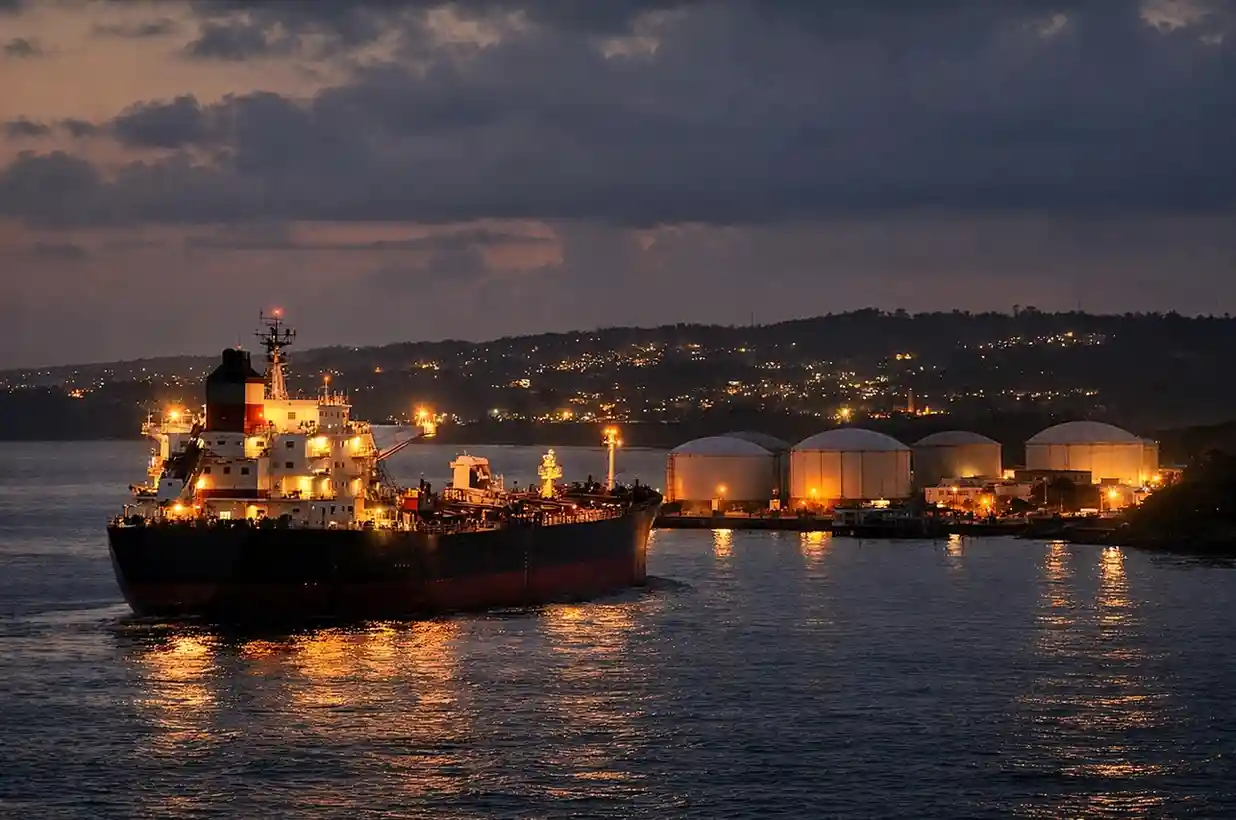
WASHINGTON — President Donald Trump declared on Sunday night that he had no problem with a Russian oil tanker off the coast of Cuba delivering relief to the island, which has been crippled by a United States oil embargo. "We have a tanker out there. We don't mind having someone get a boatload because they need to survive," Trump told reporters as he headed back to Washington. When asked if a New York Times report that the ship would be permitted to reach Cuba was accurate, Trump responded: "I told them, if a country wants to send some oil into Cuba right now, I have no problem, whether it's Russia or not." Following the war in Ukraine, the United States, the European Union, and the United Kingdom sanctioned the vessel, the Anatoly Kolodkin. Trump downplayed concerns about assisting Russia, adding, "It does not help him. He loses one boatload of oil and that's it." Trump continued: "I'd prefer letting it in, whether it's Russia or anybody else because the people need heat and cooling and all of the other things." Cuba's Deepening Energy Crisis The effective oil blockade has resulted in blackouts and trash piling up in cities, with hospitals struggling to accommodate patients and keep operating rooms open due to the energy crisis. Island-wide blackouts have plunged Cuba into further chaos, a nation already grappling with years of hardship. Public transportation has ground to a halt, all due to a lack of petroleum and essential resources. The fuel crisis has intensified the blackouts, making them more frequent and longer-lasting. The fallout has been severe: crippling gas shortages, prices that have skyrocketed, and considerable damage to the country's infrastructure. Over the past month, the island has experienced numerous total power failures, plunging Havana and other cities into darkness. The oil shortage has also impacted public services and food transportation, resulting in uncommon protests in some areas, with locals banging pots and pans and starting bonfires in the dark. According to experts, the projected shipment might create approximately 180,000 barrels of diesel, which would be enough to meet Cuba's daily demand for nine or ten days. Russian Tanker and Strategic Implications According to tracking data, the oil tanker carrying around 730,000 barrels of oil was just off the island's eastern point and was en route to Matanzas. The Anatoly Kolodkin, a member of Russia's shadow fleet, departed from Primorsk with hundreds of thousands of barrels of crude and was scheduled to dock in Matanzas port, an oil logistics hub. According to the official Cuban news site, the consignment was a direct challenge to the United States' oil blockade, and reports indicate that the Russian navy accompanied the vessel through the English Channel. Experts estimate that the shipment might provide Cuba with two to four weeks of oil, depending on rationing levels. According to the New York Times, the United States Coast Guard allowed the sanctioned vessel to travel to Cuba, though it is unclear why, citing the possibility that halting the tanker might have heightened tensions with Russia. Geopolitical Tensions and Broader Context Cuba has been at the center of a decades-long geopolitical tug-of-war between the United States and Russia. Following President Nicolás Maduro's detention in January, the United States cut off Venezuelan oil exports to Cuba and imposed penalties on countries sending crude, prompting Mexico and others to suspend shipments. The Kremlin stated that it is in contact with the Cuban administration to discuss potential aid possibilities, emphasizing Russia's growing geopolitical interest in the island. Trump, despite expressing sympathy for Cuban civilians, remained critical of the government, stating, "Cuba is finished. They run a horrible regime. They have very terrible and corrupt leadership, and whether or not they get a boat full of oil will make no difference." The unfolding situation underscores the intensifying geopolitical strains, where humanitarian worries, energy deficits, and the struggle for global dominance converge amid Cuba's worsening crisis. What to Watch Next Watch how long this flexibility lasts. If more shipments are allowed, it could ease Cuba's crisis a bit. But if the United States tightens restrictions again — or tensions with Russia rise — those supplies could quickly dry up. It is also worth watching whether this opens the door to broader policy changes toward Cuba, or if it remains a one-off exception.