Apple Raises MacBook and iPad Prices as Memory Costs Surge in AI-Driven Supply Crunch
By Benedict Johnson
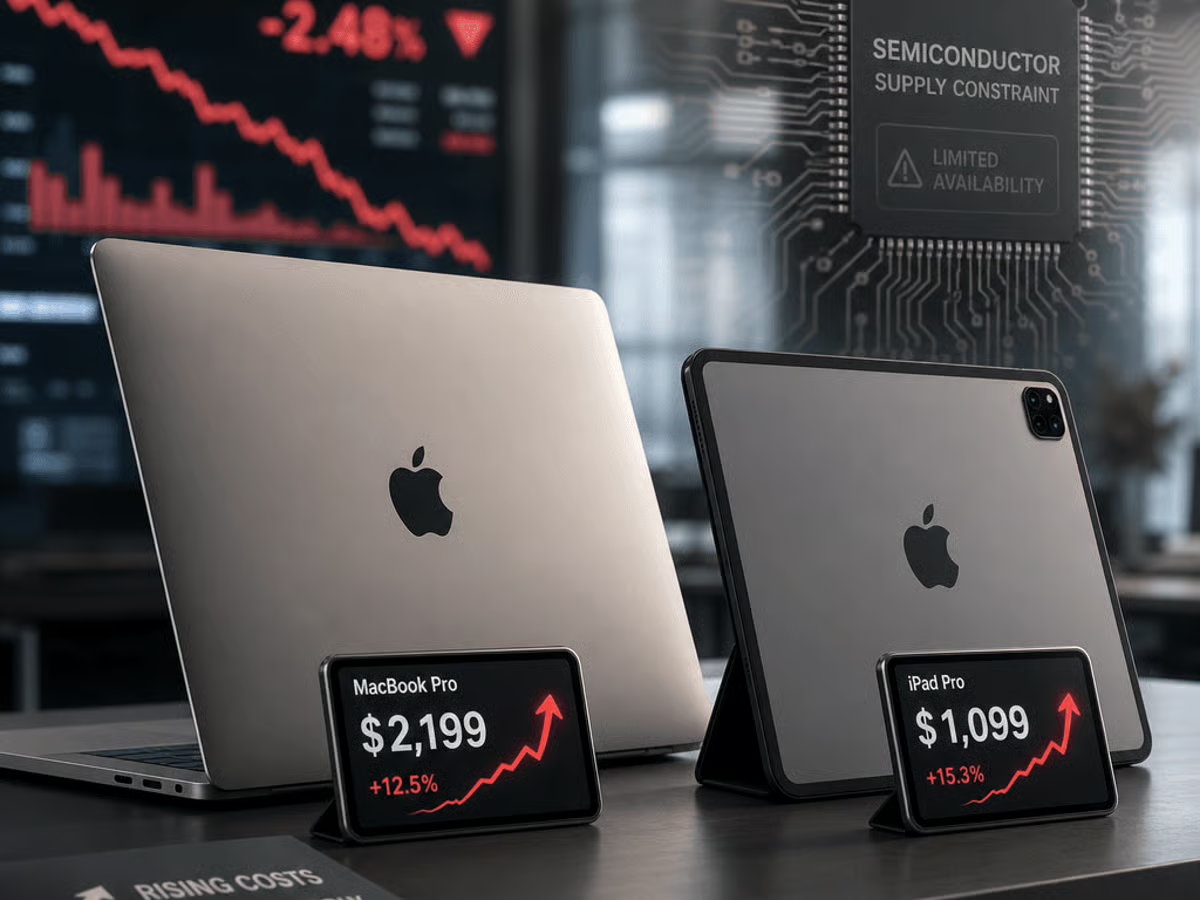
Apple has raised prices across several MacBook and iPad models, citing a sharp increase in the cost of memory and storage components as artificial intelligence infrastructure continues to expand worldwide. The increases span multiple product tiers, from entry-level devices to higher-end configurations. Apple said it can no longer absorb rising DRAM and storage chip costs, which have been driven up by heavy demand from AI data centers across the globe. It's one of Apple's more noticeable pricing adjustments in recent years, breaking from its usual approach of keeping prices steady across product generations unless there is a major redesign. At the core of the price changes is a straightforward constraint: there isn't enough memory to meet current demand. The rapid rollout of AI systems has triggered a global wave of data center construction, and those facilities rely heavily on high-performance memory chips. That surge has tightened supply across the semiconductor market, pushing up prices for DRAM and NAND flash. Apple said the cost increases have reached a point where holding previous retail prices is no longer realistic, so part of the burden is being passed on to consumers. Analysts describe the shift as structural rather than temporary. AI infrastructure, they say, is now competing directly with everyday consumer electronics for the same pool of limited memory supply. The adjustments vary by model and region, but they affect a wide range of Mac and iPad devices across different storage configurations. Some models have seen double-digit percentage price increases. MacBook Air and MacBook Pro models are among the most affected, along with iPad Air and iPad Pro versions. In some regions, even accessories and related hardware have been pulled into the price changes, showing how broadly the pressure is spreading across Apple's ecosystem. For now, iPhone pricing has not been changed. But analysts say that could shift in future releases if memory shortages persist. There is also variation by region, with currency movements and import costs adding another layer to pricing differences in certain markets. Apple isn't alone in the higher component costs. Other consumer electronics companies are also feeling the pinch, and many are now considering similar price hikes or redesigns to use fewer or lower-cost components. The shortage is already affecting product planning for PCs, smartphones and gaming devices, forcing companies to rethink how they balance performance with affordability. What stands out is how quickly AI infrastructure has changed the memory market. Chips that once were mainly linked to consumer devices are now being gobbled up by huge data center projects, changing pricing dynamics across the industry. With AI demand still rising, analysts expect memory supply constraints will stay in place through upcoming product cycles. For consumers, that likely means higher prices for laptops and tablets becoming the new normal, with smartphones potentially next if supply conditions don't ease. For manufacturers, the challenge is increasingly about protecting margins without pushing prices beyond what the market can bear. Apple's move highlights a broader reality in the tech industry: even the most premium hardware companies are exposed when global supply chains tighten, especially when a single force like AI is reshaping demand at this scale.